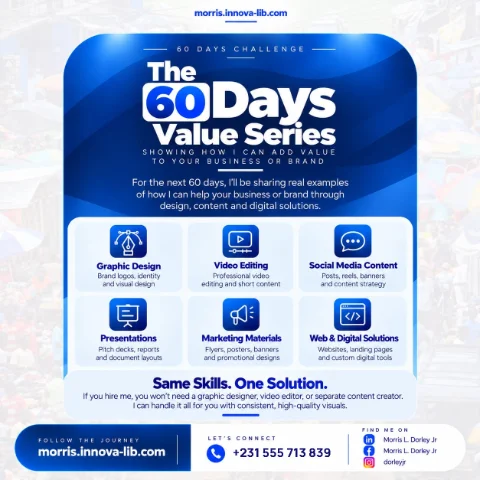

Day 26 of the 60 Days Value Series is about databases. I take business records that are scattered across notebooks, spreadsheets and phones and put them in one organized, secure place, so your team finds answers in seconds and you make decisions on real numbers.

How much time does scattered data cost your business?
Ask a simple question in many offices: how much did this customer buy from us last year? Someone opens one spreadsheet, then another, then checks a notebook, then calls a colleague who has "the latest version" on their laptop. Twenty minutes later there is an answer, and nobody is fully sure it is right.
That small delay repeats every day, for every question about customers, stock, payments, members or students. Records get duplicated, numbers do not match, a file is deleted by mistake or a laptop is stolen and months of work go with it. The business is not short of information. It is short of a place to keep it properly.
This post is for business owners, shops, schools, clinics, NGOs, microfinance groups, agencies and anyone asking, "How do I organize my business records so they are safe and easy to find?" If you are searching for database development in Liberia or a database developer in Monrovia, this is for you.
What is a database in plain language?
A database is an organized store of records that a computer can search, sort and total very quickly. Think of a well run filing cabinet, except it never loses a page, several people can use it at once and it can answer questions in a second. A good business database does three things well:
- Keeps one version of the truth. Every customer, product or payment is recorded once, and everyone sees the same, current information.
- Protects the records. Only the right people can view or change each part, and backups make sure nothing is lost.
- Answers questions fast. Sales this month, stock running low, fees still unpaid: the answer is a click away.
Your staff do not need to understand the database itself. They use simple forms, screens or a web page built on top of it.
Your data is one of the most valuable things your business owns. Customer lists, sales history and stock records took years to build. They deserve better than a spreadsheet on a single laptop.
What does the database development service include?
The service takes you from scattered files to an organized system your team relies on, step by step.
1. Understanding how you work
I start by listening. What do you track today, who records it, who needs to see it and which questions do you struggle to answer? A database should follow the way your business really works, not force you into someone else's template.
2. Database design
I plan the structure: the kinds of records, how they connect and the rules that keep them correct. For example, every sale belongs to one customer, and a product cannot be sold if stock is at zero. Good design here prevents duplicate entries and messy data for years to come.
3. Building the database
I build it with the right technology for your size and budget, such as MySQL, PostgreSQL, Microsoft SQL Server, a cloud database or, for a small office, Microsoft Access, as described in Day 7 on Microsoft Access software. I add indexes so searches stay fast as the records grow.
4. Moving your old data in
Most businesses already have years of records in spreadsheets. I clean them, remove duplicates, fix inconsistent spellings and dates, and import them into the new database. Then we check the totals together so you know nothing was lost.
5. Forms, screens and apps for your team
Staff need an easy way to add and find records. I build simple forms, a web app or a mobile screen on top of the database, using the skills from Day 19 on backend development and Day 18 on frontend development.
6. Reports and dashboards
The real value of a database is the answers it gives. I set up reports and dashboards for the numbers you care about: daily sales, top customers, overdue payments, stock levels or attendance. This connects to Day 23 on business data analysis.
7. Security, backups and support
I create user accounts with the right permissions, protect connections and set up automatic backups that are tested, not just assumed to work. Afterward I can keep the database healthy, fast and up to date, in line with the maintenance and support service.
What do you gain from a proper database?
- Answers in seconds. No more digging through files to find one record.
- Fewer errors. Rules stop duplicate entries and impossible values.
- One version of the truth. Everyone works from the same current records.
- Safer data. Permissions and backups protect years of work.
- Better decisions. Reports show what is really happening in the business.
- Room to grow. The system keeps working as records and staff increase.
- A base for everything digital. Your website, app and dashboards can all share one source.
Who is this service for?
- Shops and distributors. Businesses that need to track stock, sales and suppliers in one place.
- Schools and training centers. Institutions keeping student records, fees, grades and attendance.
- Clinics and pharmacies. Teams that must record patients, visits and medicines carefully.
- NGOs and projects. Organizations tracking beneficiaries, activities and donor reports.
- Savings groups and microfinance. Groups recording members, contributions and loans, as in Day 10 on a digital susu management system.
- Hotels and travel companies. Businesses handling bookings and guests, as in Day 8 on a travel booking system.
- Any growing business. Owners whose spreadsheets have become too big and too risky.
Why do so many businesses struggle with their records?
- Many copies of the same file. Each person edits their own version, and nobody knows which one is right.
- Data on one laptop. If it breaks or is stolen, the records are gone.
- No backups. Or backups that were never tested and do not work when needed.
- No rules. The same customer is typed three different ways.
- Paper and phones. Important records live in notebooks and chat messages.
- Reports done by hand. Someone spends days adding up numbers at the end of each month.
- Systems that do not talk. The website, the shop and the office each keep separate lists.
A well designed database, simple screens for staff and reliable backups solve most of these.
How does one person who does it all save you money?
A typical database project can involve a business analyst to understand your needs, a database designer, a developer to build the screens, a server specialist to host it and someone else to make reports. Every handover adds cost, delay and the risk that something important is lost between people.
With one person, you get:
- One person who understands the whole picture. The same person who listens to your needs also designs, builds and supports the system.
- The database and the app together. I build the screens and web apps on top of it, so the two fit perfectly.
- Hosting and security included. With the experience from Day 20 on cloud computing and Day 21 on cybersecurity, the database is hosted properly and kept safe.
- Reports that make sense. The same person who stores the data knows how to turn it into clear numbers.
- Clear pricing. One scope and one quote.
This is the idea behind the whole 60 Days Value Series: the same skills, one solution, applied to the part of your business you are looking at today.
How does a database connect to the rest of this series?
The database sits underneath almost every digital tool. An online store, as in Day 14 on e-commerce, keeps its products and orders in one. A mobile app, as in Day 11 on mobile app development, reads and saves to one. A chatbot, as in Day 24 on AI chatbots, gives better answers when it can look up real records. And a fast website, as in Day 25 on website speed, depends on queries that are designed well.
You can also read the database development service page and the databases skills page.
How do you know your business needs a database?
- Your spreadsheets are large, slow or exist in many versions.
- Finding one customer's history takes more than a minute.
- Monthly reports take days of manual work.
- Several staff need to update the same records at the same time.
- You worry about what happens if one laptop fails.
- Records live partly on paper, partly in files and partly in chats.
- You want a website, app or dashboard that uses your real data.
What mistakes should you avoid with business data?
- Building before planning. A poor structure causes problems for years.
- Skipping the data cleanup. Moving messy records into a new system only moves the mess.
- Giving everyone full access. Each person should see and change only what they need.
- Trusting untested backups. A backup is only real once you have restored it.
- Choosing a tool that is too big or too small. Match the technology to your size and budget.
- Forgetting the people. If the screens are confusing, staff go back to their spreadsheets.
- No one responsible afterward. A database needs regular care, updates and checks.
What affects the price of database development?
- How many kinds of records you need to track.
- How much old data must be cleaned and moved.
- How many users, screens and permission levels you need.
- How many reports and dashboards you want.
- Whether it connects to a website, app or other system.
- Where it is hosted and whether you want ongoing support.
I would rather give you a clear quote for the right scope than a vague number that changes later. Tell me how you keep your records today and I will explain what is needed and why.
How does it work?
- Listen. I learn what you track, who uses it and which answers you need.
- Design. I plan the structure and rules and confirm them with you.
- Build and move. I build the database, the screens and the reports, and bring your old records in.
- Train and support. I show your team how to use it and keep it safe, backed up and running.
You receive a database designed around your business, your old records cleaned and imported, simple screens for staff, reports for the numbers you care about, user permissions, tested backups and training for your team.
Which search terms does this post answer?
- database development in Liberia
- database developer in Monrovia
- how to organize business records
- replace Excel with a database
- customer database for small business
- inventory and stock database in Africa
- school records database in Liberia
- MySQL or PostgreSQL developer in Liberia
- how to back up business data
- hire a database developer in Liberia
Ready to get your business records in order?
You do not need one person to study your needs, another to design the database, another to build the screens, another to host it and another to make the reports. You need one capable person who understands your business and builds the whole system around it. That is what I offer.
Message me on WhatsApp at +231 555 713 839 or use the contact page, tell me how you keep your records today, and I will give you a clear plan and a clear quote. Same skills. One solution.
Frequently asked questions
What is a business database?
A business database is one organized, secure place where your records live: customers, sales, stock, members, students, payments or anything else you track. Instead of searching through many files, your team finds the right record in seconds.
Why not just keep using Excel?
Spreadsheets are fine for small lists. They become a problem when several people edit copies, when files grow large, when one mistake deletes a column or when you need reports across many sheets. A database keeps one version of the truth, controls who can change what and keeps working as the records grow.
Can you move my old spreadsheets into a database?
Yes. I clean the existing files, remove duplicates, fix inconsistent entries and import them into the new database, then check the totals with you so nothing is lost on the way.
Which database technologies do you use?
I choose the tool that fits the job, such as MySQL, PostgreSQL, Microsoft SQL Server, Microsoft Access for small offices, or a cloud database. What matters is that it suits your size, budget and the people who will use it.
Is my data safe in a database?
A well built database is far safer than files on one laptop. I set up user accounts with the right permissions, encrypted connections where needed and automatic backups, and I test that the backups can actually be restored.
Can my staff use it without technical training?
Yes. Staff do not work in the database directly. They use simple forms, screens or a web app on top of it, and I train them on how to add, find and report on records.
Can the database work with my website or mobile app?
Yes. The same database can sit behind your website, an online store, a booking system, a mobile app or a dashboard, so everything reads from and writes to one place.
How much does database development cost in Liberia?
The price depends on how many kinds of records you track, how much old data must be moved, how many users and reports you need, where it will be hosted and whether you want ongoing support. Tell me how you work today and I will give you a clear quote.
Do you work with clients outside Monrovia and outside Liberia?
Yes. Most database work can be done online, so I build and support databases for clients in Monrovia, across Liberia and in other African countries.