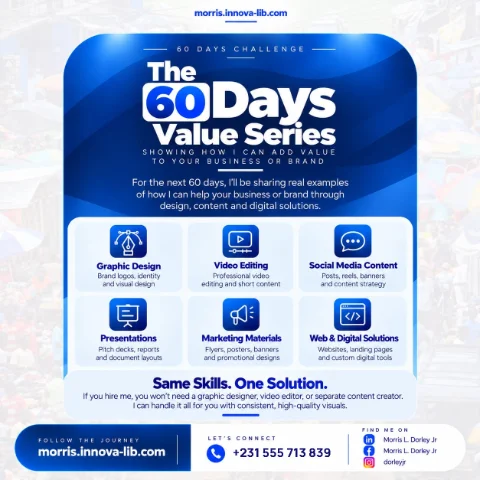

Day 33 of the 60 Days Value Series is about church management systems. I build the software that keeps your members, tithes and offerings, events and announcements in one place, so your leaders spend less time on paperwork and more time on people.

How well does your church really know its own members?
A family has attended for three years, but nobody can find their phone number when a child is sick. A member asks for a record of their tithes for the year, and the finance secretary spends a weekend going through envelopes and old notebooks. The pastor wants to know how many people came to the youth program last month, and three different leaders give three different numbers.
Then the church grows. A second service starts, then a branch in another community. Each one keeps its own list in its own way. The general overseer asks for a simple report, and nobody can produce it without a week of calls.
None of this means your leaders are careless. Most of them serve as volunteers and give a great deal of their time. The trouble is that the information lives in notebooks, phones and the memory of a few faithful people. This post is for pastors, church administrators, finance secretaries, ministry leaders and board members asking, "How do we keep our church records properly?" If you are searching for a church management system in Liberia or church software in Monrovia, this is for you.
What is a church management system in plain language?
Think of it as one careful church secretary who remembers every member, every gift and every program, never loses a page and can answer in seconds. It does three jobs at the same time:
- It keeps one record for each member. Contact details, family, ministry, zone, attendance and giving all connect to the same person.
- It does the repeated work. It adds up offerings, prepares giving statements, counts attendance and sends reminders, so volunteers do not repeat the same task by hand.
- It gives each leader the answers they need. The finance team sees giving, a ministry leader sees their group, and the senior pastor sees the whole church.
A church system is not about replacing relationships with screens. It is about making sure no member is forgotten and every gift is accounted for.
What does this look like in real work?
I built ChurchFlow, a church management platform for members, events, giving and communications. It brings the main records a church depends on into one platform instead of scattering them across notebooks and phones. You can see it on the projects page.
I have also built systems at a much larger scale. The Starz University Mobile App is a connected campus platform available to more than 15,000 students and faculty, with separate access for students, staff and administrators, official announcements and a dashboard for the executives who run the institution. It runs on AWS with 99.9% uptime and a 90% cut in operating cost. A church with many members, groups and leaders has a lot in common with a campus, and the same care goes into both. You can read the full story in the Starz University case study.
What does the church management service include?
The service takes you from notebooks and scattered lists to a system your whole leadership team can use. You do not have to start with all of it.
1. Learning how your church really works
I start by listening. How does a visitor become a member? How are offerings counted after service, and who signs for them? How are zones, cells or departments organized? Who should see giving records, and who should not? A system built on guesses creates a new kind of confusion, so these answers come first.
2. Member and family records
Each member has one profile with their contacts, family links, ministry, zone and the date they joined. You can find any member in seconds, see which families belong together and print lists for a department or a branch whenever you need them. New converts and visitors can be recorded too, so follow-up does not depend on a piece of paper.
3. Tithes, offerings and pledges
This is often where a church feels the difference first. Each gift is recorded with the member, the date, the amount, the currency and the purpose, such as tithe, offering, thanksgiving, building fund or a mission project. Pledges show what was promised and what has been paid. Receipts and yearly statements come out without anyone adding numbers by hand.
4. Counting and accountability
Offering counts can be entered by two counters and confirmed by a third, with each step recorded with a name and a time. Changes to a recorded gift can require approval. That protects honest volunteers as much as it protects the church.
5. Attendance, services and programs
Attendance can be recorded for each service, program or group from a phone or a computer. Leaders can see who has not attended for several weeks while there is still time to call or visit. Over time you can see which programs are growing and which need attention.
6. Ministries, groups and volunteers
Choir, ushers, youth, women, men, children, prayer teams and cell groups each have their own list and their own leader. Leaders see their own group only. Volunteer rotas for ushering, cleaning or media can be planned in the same place, so nobody is surprised on a Sunday morning.
7. Events, conventions and bookings
Crusades, conventions, retreats, weddings and special programs can have registration, a list of attendees and, where needed, payment records. The same approach I described in Day 8 on booking systems works for church events too.
8. Announcements and communication
You can reach the whole church, one zone or one ministry with announcements, birthday greetings, program reminders and prayer requests by SMS, WhatsApp or email, in line with Day 3 on WhatsApp automation. A message that used to depend on the announcement time at service can reach people the same day.
9. Reports for leadership and branches
Membership growth, attendance and giving by month, by purpose and by branch are ready when the pastor or the board asks, in line with Day 23 on business data analysis. If you have several branches, each one keeps its own records while headquarters sees the whole picture.
10. Moving your records, training and support
I bring in your existing member lists and giving records, then check them with your team before anything goes live. I train your secretaries, finance team and ministry leaders on the real system with their real records, and stay available afterward, in line with the maintenance and support service.
What does your church gain from a proper system?
- Every gift accounted for. Giving records are clear, and members can receive receipts and statements.
- Greater trust. Recorded counts and approvals reduce suspicion and protect the people who handle money.
- No member forgotten. Leaders can see who has stopped attending and follow up in time.
- Faster communication. Announcements reach the right people directly, not only those who were present.
- Records that survive. Rain, fire, termites and a lost notebook do not destroy backed-up data.
- Less work for volunteers. The arithmetic and the lists are done for them.
- Better planning. You can see membership, attendance and giving before you plan a building project or a new branch.
Who is this service for?
- Local churches. Congregations that want clear member and giving records without heavy paperwork.
- Churches with several branches. Ministries that want every branch reporting in the same way.
- Ministries and fellowships. Campus fellowships, prayer ministries and outreach groups that need to keep track of members and programs.
- Mosques and other faith communities. The same tools work for any community that keeps members, contributions and programs.
- Faith-based NGOs. Organizations that must track beneficiaries, donations and programs and report to sponsors.
- Church schools and mission projects. Projects linked to a church that also need student or patient records, in line with Day 32 on school management systems.
Should you buy ready-made church software or have a system built?
I would rather give you an honest answer than sell you something you do not need. Ready-made church software can be a good choice if it fits your structure and your budget. Before you agree, check the monthly fees in US dollars, whether it works on your internet connection, whether it supports Liberian dollars and mobile money records, who helps you locally and whether you can take your data with you if you leave.
A system built for you makes sense when:
- Your zones, departments or branch structure do not fit what ready-made tools expect.
- You receive gifts in more than one currency and through mobile money.
- You want a mobile experience for your members, as in Day 11 on mobile app development.
- You want it connected to your church website, as described on the web development service page.
- You want to own your records and not depend on a foreign vendor's prices and changes.
A small church with simple needs may also do well with something lighter, like the system described in Day 7 on Microsoft Access software. If that suits you better, I will say so.
How does one person who does it all save your church money?
A church system can involve a consultant, a developer, a database specialist, a website designer, a hosting provider and a trainer. When a gift does not appear on a member's statement, each one can point to someone else, and the church pays for every conversation.
With one person, you get:
- One person who understands your church and the software. Nothing is lost between the person who listens and the person who builds.
- The whole system together. The database, the full application and the phone-friendly screens come from the same person.
- Design and media from the same hand. Program flyers and event videos can match the system and the website, in line with Day 1 on graphic design and Day 2 on video editing.
- Hosting that fits a church budget. I set it up in line with Day 20 on cloud computing, so you pay for what you use.
- Security and backups included. Member and giving records are protected, in line with Day 21 on cybersecurity.
- Clear pricing. One scope and one quote.
How do you know your church needs a system?
- Members ask for a record of their giving, and it takes days to prepare.
- Offering counts depend on one or two people, and nobody else can check them.
- You cannot say today how many active members you have.
- Visitors come once and are never followed up.
- Each branch or department keeps records in its own way.
- Announcements reach only the people who were in service that day.
- Important records sit with one person, and everything slows when they travel.
What mistakes should churches avoid when choosing a system?
- Trying to do everything at once. Start with what matters most, usually members and giving, and add the rest in stages.
- Going live during a convention or a building drive. Choose a quieter season and run the old method alongside the new one for a short period.
- Moving messy records without checking them. If the first statements are wrong, members will not trust the system.
- Sharing one login. When everyone uses the same account, nobody is accountable for a changed record.
- Showing giving records to everyone. Decide who can see what before the first gift is recorded.
- Forgetting the volunteers. If entering attendance is slow on the phones they have, they will go back to paper.
- Having no backups. Years of church records should survive a broken computer or a stolen phone.
- Not asking who owns the data. Make sure your church can always get its records out.
What affects the price of a church management system?
- How many members, branches and leaders will use it.
- Which features you need first and which can wait.
- How many old records must be moved, and how clean they are.
- Whether you need event registration, pledges or several currencies.
- Whether members will log in themselves, or only your leaders.
- Whether you want SMS messages, a mobile app or a connected website.
- How much training and ongoing support you want.
I would rather give you a clear quote for the right scope than a low number that grows later. Tell me how your church keeps its records today and I will explain what you need now, and what can wait.
How does it work?
- Meet and listen. I learn how membership, giving, programs and communication work today, and where they break down.
- Plan. We agree on the features, stages and budget, and on whether to buy or build.
- Build and test. I build the system in stages, using your real structure, giving categories and reports, and your team tests it.
- Move, train and go live. We check your records, train your leaders and start at a quiet point in the church calendar, with me on hand for the first weeks.
You receive member and family records, giving records with receipts and statements, attendance, groups and ministries, announcements, leader accounts, the reports you need, backups and training for your team, plus the event and branch features you choose. You can also read the full-stack development service page and the database development service page.
Which search terms does this post answer?
- church management system in Liberia
- church software in Monrovia
- church membership software in Liberia
- tithe and offering records software
- church giving tracker in Liberia
- church app in Africa
- how to keep church financial records
- ready-made or custom church software
- how to follow up church visitors
- hire a church software developer in Liberia
Ready to care for every member and account for every gift?
You do not need one company for the software, another for the database, another for the website and another for support, with your finance team in the middle when the records do not match. You need one capable person who understands how a church works and builds the whole system around it. That is what I offer.
Message me on WhatsApp at +231 555 713 839 or use the contact page, tell me how your church keeps its members and giving records today, and I will give you a clear plan and a clear quote. Same skills. One solution.
Frequently asked questions
What is a church management system?
It is one secure place for the records a church depends on: members and families, attendance, tithes and offerings, pledges, groups, events and announcements. Each leader logs in and sees what their role needs, so the same information is not written again in several notebooks.
Is a church management system only for big churches?
No. A church with fifty members can still benefit from clear giving records and a simple way to reach everyone. The difference is scope. A small church can start with members and giving, then add events and groups later.
Have you built church software before?
Yes. I built ChurchFlow, a church management platform for members, events, giving and communications. You can see it on my projects page. I have also built platforms used at a much larger scale, such as the Starz University Mobile App, which is available to more than 15,000 students and faculty.
Can members get a receipt or statement for their tithes?
Yes. Each gift can be recorded against the member who gave it, with the date, the amount, the currency and the purpose, such as tithe, offering, building fund or a special project. A member can receive a receipt for one gift or a statement for the whole year.
Can it handle both US dollars and Liberian dollars?
Yes. Many churches in Liberia receive both. Each gift keeps its own currency, and reports can show the totals for each currency separately, so nobody has to guess what was collected.
Can members give through mobile money?
The system can record mobile money gifts with their transaction ID, so the finance team can match each gift to the right member. Whether giving can also start from a link or an app depends on the payment options available to your church, and I will explain the choices honestly before we build.
Can we send announcements to the whole church?
Yes. You can reach all members, one ministry, one zone or one group with announcements and reminders by SMS, WhatsApp or email. That is in line with Day 3 on WhatsApp automation.
Is member information kept private?
It must be. Counseling notes, family details and giving records are personal. Each leader gets their own login with limited access, important changes are recorded with a name and time, connections are encrypted and backups are kept. Not every leader needs to see what each member gives.
How much does a church management system cost in Liberia?
The price depends on your number of members and branches, which features you need first, how many old records must be moved and how much training your team needs. Tell me how your church keeps its records today and I will give you a clear quote.
Do you work with churches outside Monrovia and outside Liberia?
Yes. Most of the building, setup and support can be done online, so I work with churches and ministries in Monrovia, across Liberia and in other African countries. Training is planned around where your team is and what your connection allows.